
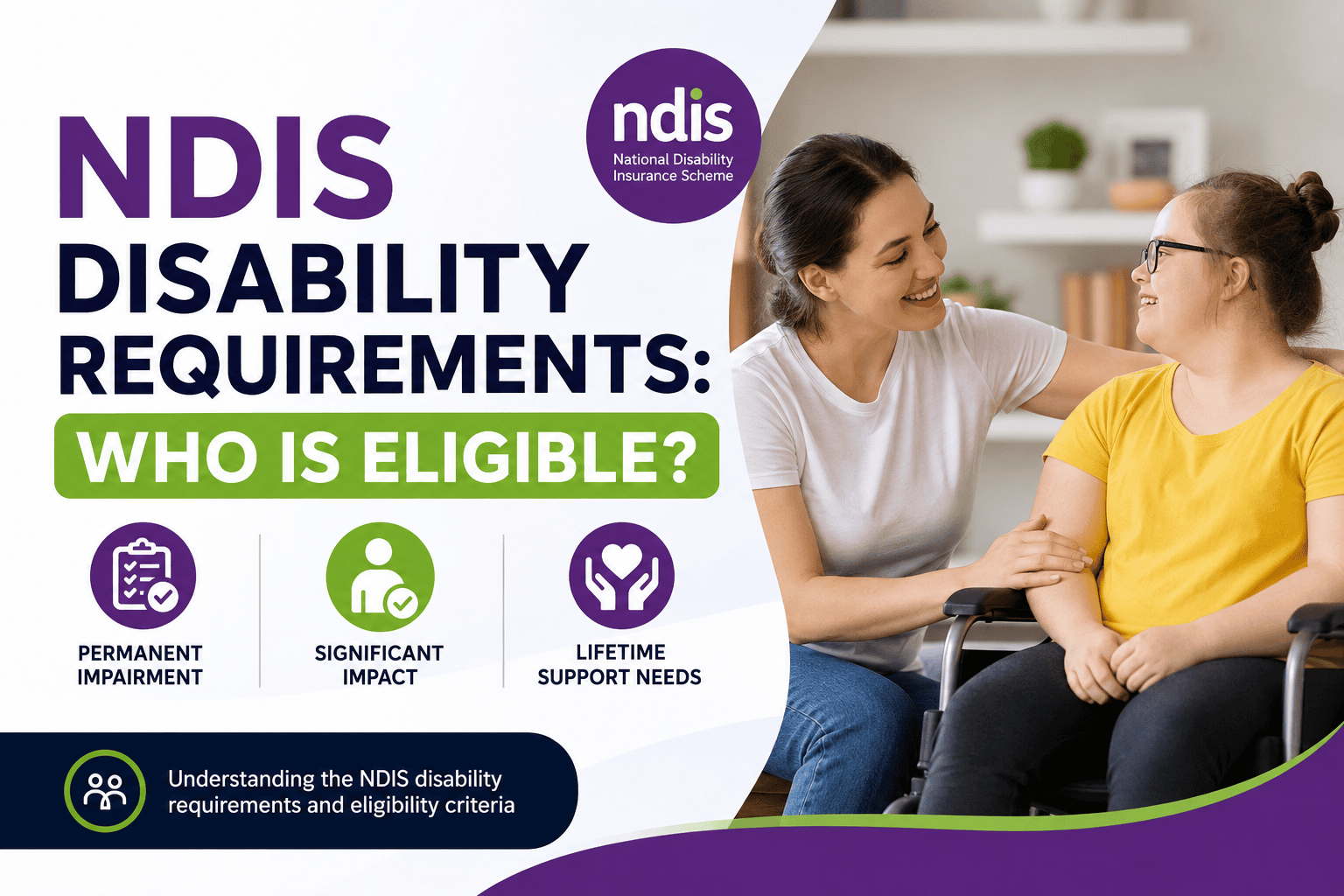
NDIS Disability Requirements: Who Is Eligible?
Wondering whether you qualify for the National Disability Insurance Scheme (NDIS)? Understanding the NDIS disability requirements is the first step towards accessing funded supports that can help you live more independently, participate in your community, and achieve your personal goals.
While many people assume that having a disability automatically makes them eligible for the NDIS, that’s not always the case. The National Disability Insurance Agency (NDIA) assesses every application against specific eligibility criteria set out in the NDIS Act. Applicants must demonstrate that their disability is permanent, significantly impacts their everyday life, and is likely to require lifelong support.
In this guide, we’ll explain the NDIS disability requirements in simple language, who qualifies, what evidence you’ll need, and common reasons applications may not be approved.
What are the NDIS Disability Requirements?
The NDIS disability requirements are a set of legal eligibility criteria used by the NDIA to determine whether someone can become an NDIS participant.
To qualify under the disability requirements, you generally need to show that:
- Your disability is caused by one or more permanent impairments.
- The impairment significantly affects your ability to perform everyday activities.
- You are likely to require NDIS-funded supports throughout your lifetime.
It’s important to understand that the NDIS funds disability-related supports, not medical conditions themselves. Your diagnosis is only one part of the assessment. The NDIA focuses on how your impairment affects your daily functioning.
Basic Eligibility Before Disability Requirements

Before assessing your disability, the NDIA first checks whether you meet the basic access requirements.
You must:
- Be under 65 years of age when applying.
- Live in Australia.
- Be an Australian citizen, permanent resident, or Protected Special Category Visa holder.
Once these conditions are met, your disability eligibility is assessed.
3 Main Disability Requirements
1. Your Disability Must Be Caused by a Permanent Impairment
Your disability must result from one or more impairments that are likely to be permanent.
The NDIA recognises impairments including:
- Intellectual
- Cognitive
- Neurological
- Physical
- Sensory (vision or hearing)
- Psychosocial disabilities caused by permanent mental health conditions
The cause of the impairment doesn’t matter. It may have resulted from:
- Birth conditions
- Genetic disorders
- Injury
- Illness
- Progressive conditions
What matters is that the impairment is expected to remain for life.
What does “likely to be permanent” mean?
Permanent doesn’t necessarily mean your condition can never improve.
Instead, the NDIA considers whether:
- There is no known cure.
- Available treatments have been explored.
- Any future improvement is unlikely to remove the need for disability support.
For example, someone with cerebral palsy may improve mobility through therapy but still have lifelong support needs.
2. Your Impairment Must Significantly Affect Everyday Life
This is one of the most important parts of the assessment.
Rather than focusing only on your diagnosis, the NDIA examines how your impairment affects your functional capacity.
This includes activities such as:
- Personal care
- Dressing
- Bathing
- Cooking
- Cleaning
- Mobility
- Communication
- Learning
- Social interaction
- Employment
- Managing finances
- Participating in community activities
The greater your difficulty performing everyday activities independently, the stronger your evidence for meeting this requirement.
Example
Two people may both have multiple sclerosis.
- One continues working independently with minor adjustments.
- Another requires assistance for mobility, personal care, and daily living.
Although the diagnosis is the same, their eligibility outcomes may differ because their functional impacts are different.
3. You’ll Likely Need Lifetime Disability Supports
The final disability requirement considers whether you’re likely to require ongoing NDIS supports throughout your life.
The NDIA evaluates:
- Your long-term support needs
- Whether community services alone are sufficient
- Whether NDIS supports are the most appropriate option
- Your overall life circumstances
Even if your support needs change over time, you may still satisfy this requirement if ongoing disability supports remain necessary.
Common Disabilities that May Meet the Requirements
Every application is assessed individually.
Examples of conditions that may qualify include:
- Autism Spectrum Disorder
- Cerebral Palsy
- Down Syndrome
- Multiple Sclerosis
- Muscular Dystrophy
- Acquired Brain Injury
- Spinal Cord Injury
- Blindness
- Significant Hearing Loss
- Parkinson’s Disease
- Intellectual Disability
- Permanent psychosocial disability
Having one of these conditions does not automatically guarantee approval.
Your application must still demonstrate permanent impairment, functional impact, and lifelong support needs.
What Evidence Do You Need?
Medical evidence plays a crucial role in your application.
The NDIA generally expects documentation from treating professionals such as:
- General Practitioners
- Specialists
- Psychologists
- Occupational Therapists
- Physiotherapists
- Speech Pathologists
- Psychiatrists
Supporting evidence may include:
- Medical reports
- Functional assessments
- Therapy reports
- Hospital records
- Specialist letters
- Diagnostic assessments
Good evidence should explain:
- Your diagnosis
- The nature of your impairment
- Why it is permanent
- How it affects your daily life
- Why lifelong disability supports are required
Diagnosis Alone Isn’t Enough
One of the biggest misconceptions is believing that a diagnosis automatically qualifies someone for the NDIS.
The NDIA looks beyond medical labels.
For example:
Instead of simply stating:
“The applicant has Autism.”
Strong supporting evidence would explain:
- Difficulties communicating.
- Challenges with independent living.
- Need for daily supervision.
- Limited social participation.
- Ongoing therapy requirements.
Functional impact is often more important than the diagnosis itself.
Functional Capacity Matters
The NDIA wants to understand how your disability affects everyday functioning.
Some areas they consider include:
| Area | Examples |
|---|---|
| Mobility | Walking, transferring, balance |
| Communication | Speaking, understanding others |
| Learning | Memory, concentration, problem solving |
| Self-care | Showering, dressing, eating |
| Social interaction | Relationships, community participation |
| Self-management | Decision making, planning daily tasks |
The more evidence you provide demonstrating limitations in these areas, the easier it becomes for assessors to understand your support needs.
What If Your Condition Changes?
Many disabilities fluctuate.
Conditions such as:
- Multiple Sclerosis
- Parkinson’s Disease
- Mental health conditions
- Autoimmune disorders
may involve periods of improvement followed by worsening symptoms.
The NDIA recognises this.
Eligibility is based on your overall long-term functional impact rather than your condition on a single good or bad day.
Can Children Qualify?
Yes.
Children who meet the age and residency requirements may qualify if they satisfy the disability requirements.
Some younger children may instead receive assistance through the NDIS early childhood approach if early intervention is more appropriate.
Important: Common Reasons Applications Are Declined
Applications may not succeed if:
- The impairment isn’t considered permanent.
- Medical evidence is incomplete.
- Functional impact isn’t clearly documented.
- Community or mainstream services are more appropriate.
- Lifetime support needs cannot be demonstrated.
- Reports focus only on diagnosis instead of disability-related limitations.
Many unsuccessful applications are later approved after stronger supporting evidence is provided.
Tips to Strengthen Your Application
Before applying:
- Gather reports from all treating professionals.
- Explain how your disability affects everyday activities.
- Include functional assessments where possible.
- Demonstrate long-term support needs.
- Ensure your reports clearly state the impairment is permanent.
- Avoid relying solely on diagnostic reports.
Well-prepared evidence helps the NDIA make informed decisions.
Frequently Asked Questions
Does having a disability automatically qualify me for the NDIS?
No. You must meet the age, residency, and disability eligibility requirements, including demonstrating permanent impairment, significant functional impact, and likely lifelong support needs.
What does “permanent impairment” mean?
It means your impairment is likely to remain for life, even if treatment or therapy helps improve some aspects of your condition.
Can I qualify with a psychosocial disability?
Yes. People with a psychosocial disability caused by a permanent mental health impairment may qualify if they meet all disability requirements.
What professionals can provide supporting evidence?
Evidence may come from GPs, specialists, psychologists, psychiatrists, occupational therapists, physiotherapists, speech pathologists, and other treating health professionals.
What if I don’t meet the disability requirements?
If you don’t qualify under the disability requirements, you may still be eligible under the NDIS early intervention requirements. If not, we as Authorised NDIS provider can help connect you with other community and mainstream supports.
Final Thoughts
Understanding the NDIS disability requirements can make the application process much less overwhelming. The NDIA looks beyond a diagnosis to assess how a permanent impairment affects your everyday life and whether you are likely to need disability-specific supports for the long term. Preparing thorough medical evidence and clearly documenting your functional challenges can significantly strengthen your application.
If you’re unsure whether you meet the requirements, consider speaking with your healthcare professional or an NDIS partner before applying. They can help you understand the eligibility criteria, gather the right evidence, and determine the most appropriate pathway for accessing support.
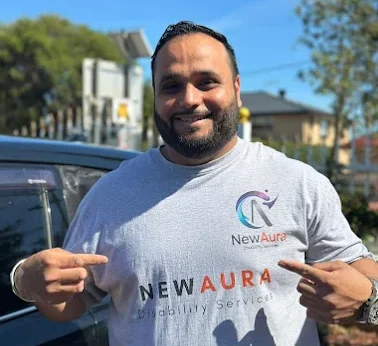
Manmohan Singh is the owner of NewAura, a trusted NDIS support provider in Western Sydney. With over 10 years of experience, he has helped improve people’s lives through compassionate care, personalized support, and versatile NDIS services tailored to individual needs and independence goals.