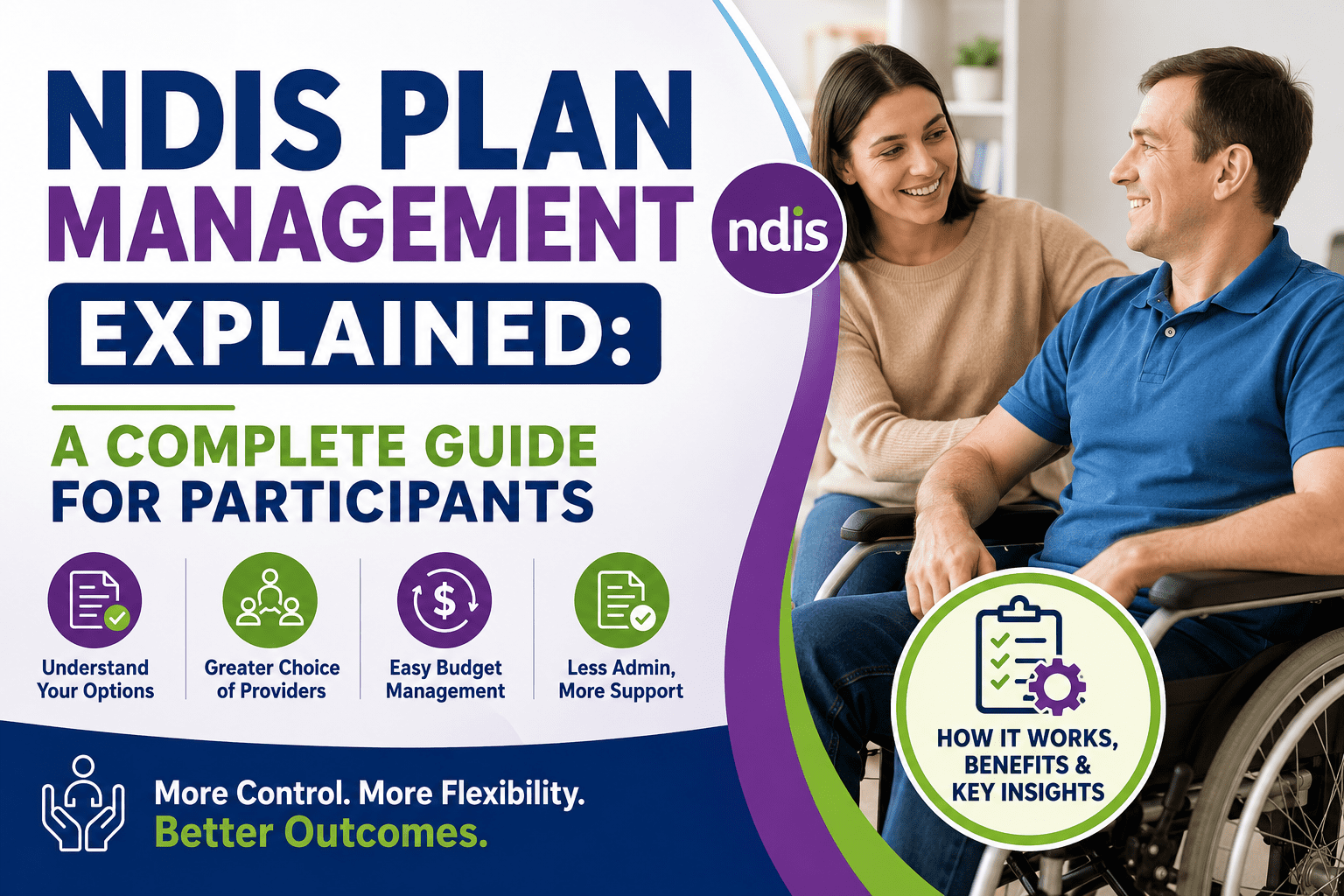
Know about NDIS Plan Management
Navigating the National Disability Insurance Scheme (NDIS) can be both exciting and overwhelming. While the NDIS provides participants with funding to access the supports they need, understanding how that funding is managed is just as important as choosing the right services. One of the most popular funding management options available today is NDIS Plan Management.
Having worked with NDIS participants, families, support providers, and disability service organizations over the years, I’ve noticed that many people initially focus on their funding amount but pay less attention to how their funding will actually be managed.
However, the way your NDIS funds are administered can significantly impact your flexibility, provider choices, and overall experience with the scheme.
This comprehensive guide explains everything participants need to know about NDIS Plan Management, including how it works, its benefits, how it differs from other management options, and how to determine whether it is the right choice for your circumstances.
Understanding NDIS Funding Management
When you receive an NDIS plan, you are given funding to access supports that align with your goals and needs. However, before you can start using that funding, you must decide how it will be managed.
The NDIS offers three funding management options:
Agency Management
Under agency management, the National Disability Insurance Agency (NDIA) manages your funding directly. The NDIA pays providers on your behalf, and participants can only use registered NDIS providers.
This option is simple but offers less flexibility when choosing service providers.
Self-Management
Self-management gives participants complete control over their funding. Participants are responsible for paying providers, submitting claims, maintaining records, and monitoring their budgets.
While this option provides maximum flexibility, it also requires significant administrative responsibility.
Plan Management
Plan management combines the best aspects of both agency management and self-management. Participants retain flexibility and choice while a professional plan manager handles the financial administration.
This option has become increasingly popular because it provides greater freedom without the burden of managing invoices and payments independently.
What Is NDIS Plan Management?
NDIS Plan Management is a financial administration service funded by the NDIS that helps participants manage their plan funding.
A plan manager acts as an intermediary between participants, providers, and the NDIA. Their role is to manage the financial side of your NDIS plan so you can focus on achieving your goals and accessing the supports you need.
The service typically includes:
- Processing invoices
- Paying service providers
- Tracking budgets
- Monitoring spending
- Providing financial reports
- Assisting with NDIS funding queries
- Helping participants understand their budgets
Importantly, participants maintain control over their support decisions while receiving professional assistance with financial administration.
How Does NDIS Plan Management Work?
Many participants assume plan management is complicated, but the process is actually straightforward.
Step 1: Request Plan Management
During your NDIS planning meeting or plan review, you can request plan management funding.
In most cases, the NDIS will include separate funding for plan management when requested.
Step 2: Choose Your Plan Manager
Once your plan includes plan management funding, you can choose a registered plan management provider.
You are free to compare providers based on factors such as:
- Customer support
- Communication
- Industry experience
- Reporting systems
- Invoice processing times
- Online budget tracking tools
Choosing the right plan manager can have a significant impact on your overall NDIS experience.
Step 3: Access Supports and Services
One of the key benefits of plan management is flexibility.
Unlike agency-managed participants, plan-managed participants can engage both registered and non-registered providers, giving them access to a wider range of services.
Step 4: Service Delivery
Once services are delivered, providers generate invoices for payment.
Invoices can either be sent directly to your plan manager or forwarded by you.
Step 5: Invoice Processing and Payment
Your plan manager reviews the invoice, checks that it aligns with your approved funding categories, and submits the claim through the NDIS system.
Once approved, payment is processed to the provider.
Step 6: Budget Monitoring
Throughout the duration of your plan, your plan manager tracks your spending and provides regular budget updates.
This helps ensure that you do not overspend or underutilize your available funding.
Why Is NDIS Plan Management So Popular?
Over the years, plan management has become one of the most commonly chosen funding options among participants.

The reason is simple: it offers a balance between flexibility and convenience.
Participants can enjoy greater choice and control without dealing with the paperwork and financial administration associated with self-management.
For many people, this balance provides the best of both worlds.
Key Benefits of NDIS Plan Management
Greater Choice of Providers
Perhaps the most significant advantage of plan management is the ability to access both registered and non-registered providers.
This allows participants to:
- Choose providers that best suit their needs
- Access local support workers
- Work with specialized therapists
- Explore a wider range of service options
In regional and remote communities, this flexibility can be particularly valuable.
Reduced Administrative Work
Managing invoices, payment requests, and financial records can quickly become overwhelming.
A plan manager takes care of these tasks, allowing participants and families to focus on support outcomes rather than paperwork.
Professional Financial Support
NDIS budgets can be complex.
Participants often have multiple funding categories, varying support arrangements, and several service providers.
Plan managers provide professional oversight that helps ensure funds are used correctly and efficiently.
Better Budget Visibility
Most plan managers offer regular reports and online portals that provide real-time budget information.
Participants can easily see:
- Remaining funding
- Current spending
- Budget utilization rates
- Upcoming payments
This transparency helps participants make informed decisions throughout their plan period.
No Impact on Support Funding
Many participants worry that using a plan manager will reduce the funding available for supports.
However, plan management funding is generally allocated separately by the NDIS.
This means participants receive professional financial management without reducing their support budget.
Less Financial Stress
Knowing that invoices are being handled professionally can provide significant peace of mind.
Participants can focus on achieving their goals rather than worrying about payment processing and administrative tasks.
Plan Management vs Self-Management
Many participants compare these two options before making a decision.
Self-Management Advantages
- Maximum flexibility
- Direct control over funding
- Ability to negotiate provider rates
- Immediate oversight of spending
Self-Management Challenges
- Administrative workload
- Record-keeping responsibilities
- Claim processing requirements
- Increased financial accountability
Plan Management Advantages
- Administrative support
- Professional budget monitoring
- Access to registered and non-registered providers
- Reduced paperwork
Plan Management Challenges
- Reliance on a third party for payments
- Less direct control over day-to-day financial transactions
For participants who want flexibility without administration, plan management is often the preferred option.
Common Misconceptions About NDIS Plan Management
Myth 1: Plan Managers Make Decisions About My Supports
This is incorrect.
Participants remain in control of all support decisions.
Plan managers handle financial administration only.
Myth 2: Plan Management Is Only for People Who Need Financial Help
Not at all.
Many participants choose plan management simply because it saves time and reduces paperwork.
Myth 3: Plan Management Costs Extra
Plan management is funded separately through the NDIS when included in your plan.
Participants generally do not pay additional fees from their support budgets.
Myth 4: I Can Only Use Registered Providers
Plan-managed participants can use both registered and non-registered providers, offering far greater flexibility than agency management.
How to Choose the Right Plan Manager?

Not all plan managers provide the same level of service. When comparing providers, consider the following factors.
- Communication – Look for a provider that responds promptly and explains information clearly.
- Transparency – Choose a plan manager that provides easy-to-understand reports and budget updates.
- Technology – Many leading providers offer online portals and mobile-friendly tools for monitoring budgets.
- Industry Experience – Experienced plan managers often have a stronger understanding of NDIS processes and funding requirements.
- Invoice Processing Speed – Timely invoice processing helps ensure providers are paid promptly and support services continue smoothly.
When Should You Consider NDIS Plan Management?
Plan management may be ideal if you:
- Want more provider choices
- Prefer not to manage invoices
- Need assistance tracking budgets
- Have multiple service providers
- Want flexibility without financial administration
- Feel overwhelmed by NDIS paperwork
Many participants find that plan management allows them to focus on achieving their goals rather than managing financial processes.
Tips for Making the Most of Your Plan Management Service
To maximize the benefits of plan management:
- Review your budget regularly.
- Stay informed about your funding categories.
- Communicate openly with your plan manager.
- Notify your plan manager when changing providers.
- Keep copies of service agreements.
- Monitor your spending patterns.
- Ask questions whenever you are unsure about funding rules.
An engaged participant working alongside a responsive plan manager often achieves the best outcomes.
Final Thoughts
NDIS Plan Management has become one of the most effective ways for participants to manage their NDIS funding. It offers a practical combination of flexibility, financial support, and administrative convenience that many participants find invaluable.
By handling invoices, payments, and budget tracking, a plan manager removes much of the complexity associated with NDIS funding management while allowing participants to retain control over their support choices. This creates a smoother and more empowering NDIS experience.
For participants seeking greater provider choice without the burden of self-management, plan management can provide the ideal solution. Understanding how it works and selecting the right plan manager can help you make the most of your NDIS funding and focus on what matters most achieving your goals, increasing independence, and improving your quality of life.